
Collection
Bibliotheca Aeterna
Ancient literature
Archaic and classical Greek literature survives in a compact corpus: the two epics of Homer, which found the tradition; the tragedies of Aeschylus, Sophocles, and Euripides; the comedy of Aristophanes; and what papyrus has returned of the most admired poet of New Comedy (Menander). The Bibliotheca Aeterna gathers this entire surviving corpus, author by author, Greek text with translation in parallel.
Each volume follows the same apparatus, built in a funnel on the model of the great scholarly editions: a general Introduction (the author’s world and art), a Notice proper to each work, and end Notes anchored to the line. The translations are, unless noted otherwise, those given by Leconte de Lisle, for the Homeric epics as for the three tragedians, and by Eugène Talbot for Aristophanes, all in the public domain, set against the Greek text of the reference editions.
The volumes
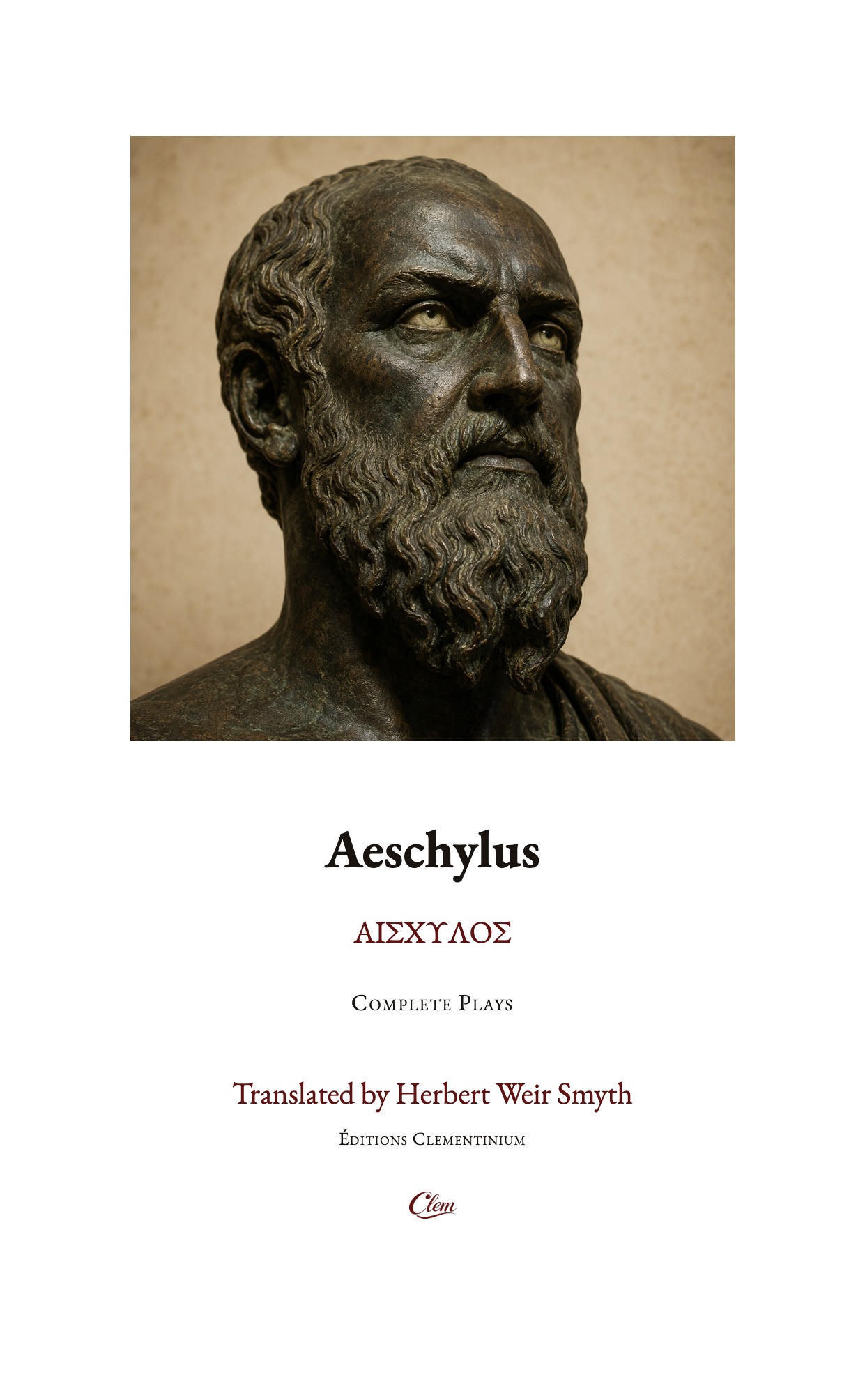
Aeschylus
The Seven Tragedies, with Greek Text
The seven surviving tragedies of Aeschylus (The Persians, Seven against Thebes, The Suppliants, the Oresteia trilogy made up of Agamemnon, The Libation Bearers and The Eumenides, and Prometheus Bound), Greek text with Herbert Weir Smyth's Loeb translation (1922-1926) in parallel. The earliest of the three tragedians: the invention of the second actor, the only trilogy to survive whole, and the line from the Agamemnon that named a whole way of thinking about suffering, pathei mathos, through suffering, knowledge. A general Introduction, a Notice for each play, and line-anchored Notes accompany the text, on the model of the great scholarly editions.
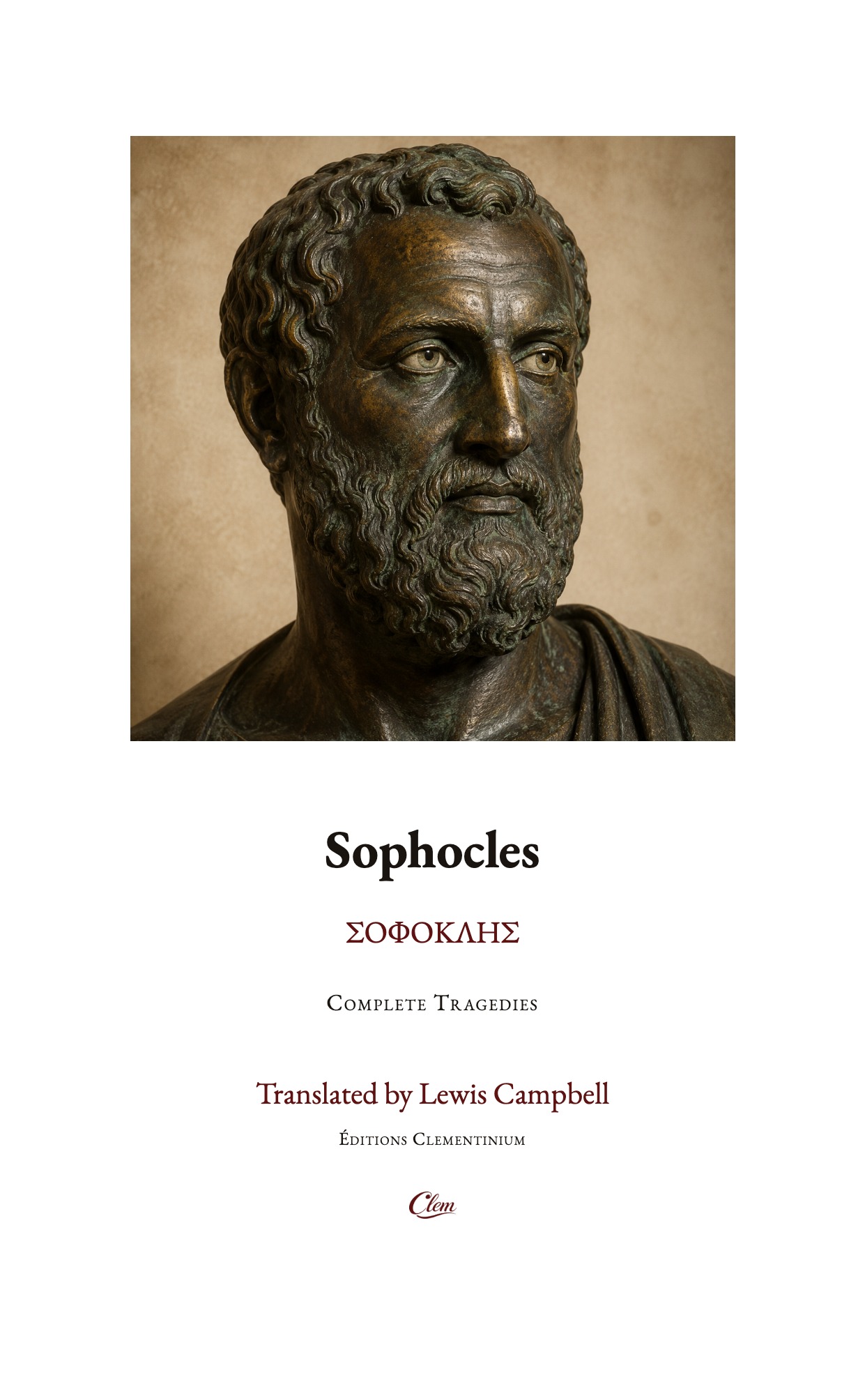
Sophocles
The Seven Tragedies, with Greek Text
The seven surviving tragedies of Sophocles (Ajax, The Trachiniae, Antigone, Oedipus the King, Electra, Philoctetes, Oedipus at Colonus), Greek text with Lewis Campbell's verse translation (Oxford, 1879) in parallel. The second of the three tragedians, the one Aristotle held up as the model: the invention of the third actor, the solitary hero driven to the limit, the tragic irony of Oedipus the King. A general Introduction in two essays (Sophocles's world; Sophocles's art and the transmission of the text), a Notice for each play, and line-anchored Notes accompany the text.
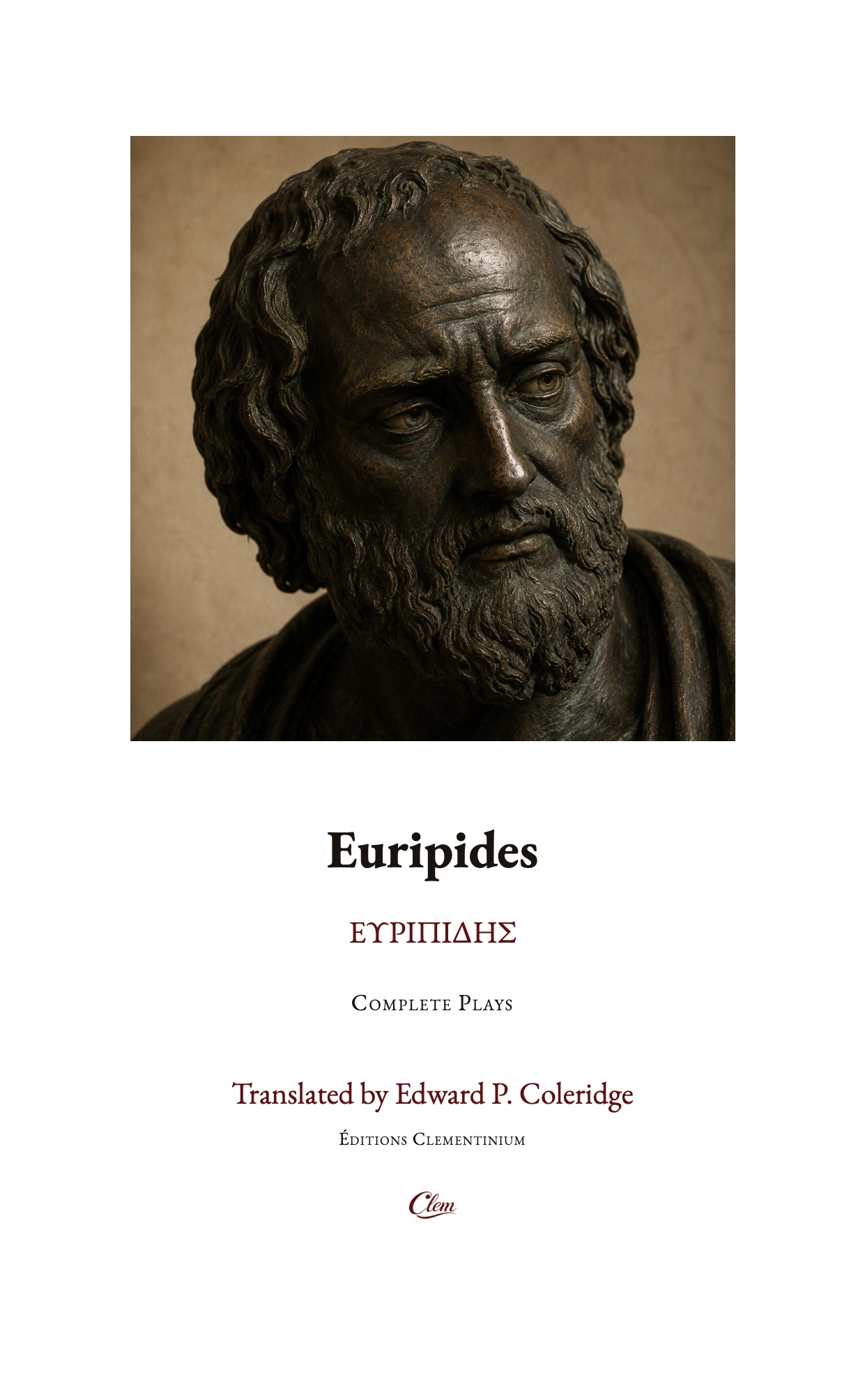
Euripides
Nineteen Plays, with Greek Text
The eighteen surviving tragedies, the satyr play Cyclops, and Rhesus (of disputed authorship): nineteen plays in all, by far the largest surviving tragic corpus, Greek text with Edward P. Coleridge's translation (George Bell & Sons, 1891) in parallel. The youngest and most contested of the three tragedians, 'the most tragic of the poets' in Aristotle's judgment: the expository prologue, the deus ex machina, the critique of the gods, only four victories in his lifetime and immense posthumous fame. A general Introduction in two essays, a Notice for each play (in chronological order, from Alcestis in 438 to the posthumous Bacchae), and line-anchored Notes accompany the text.
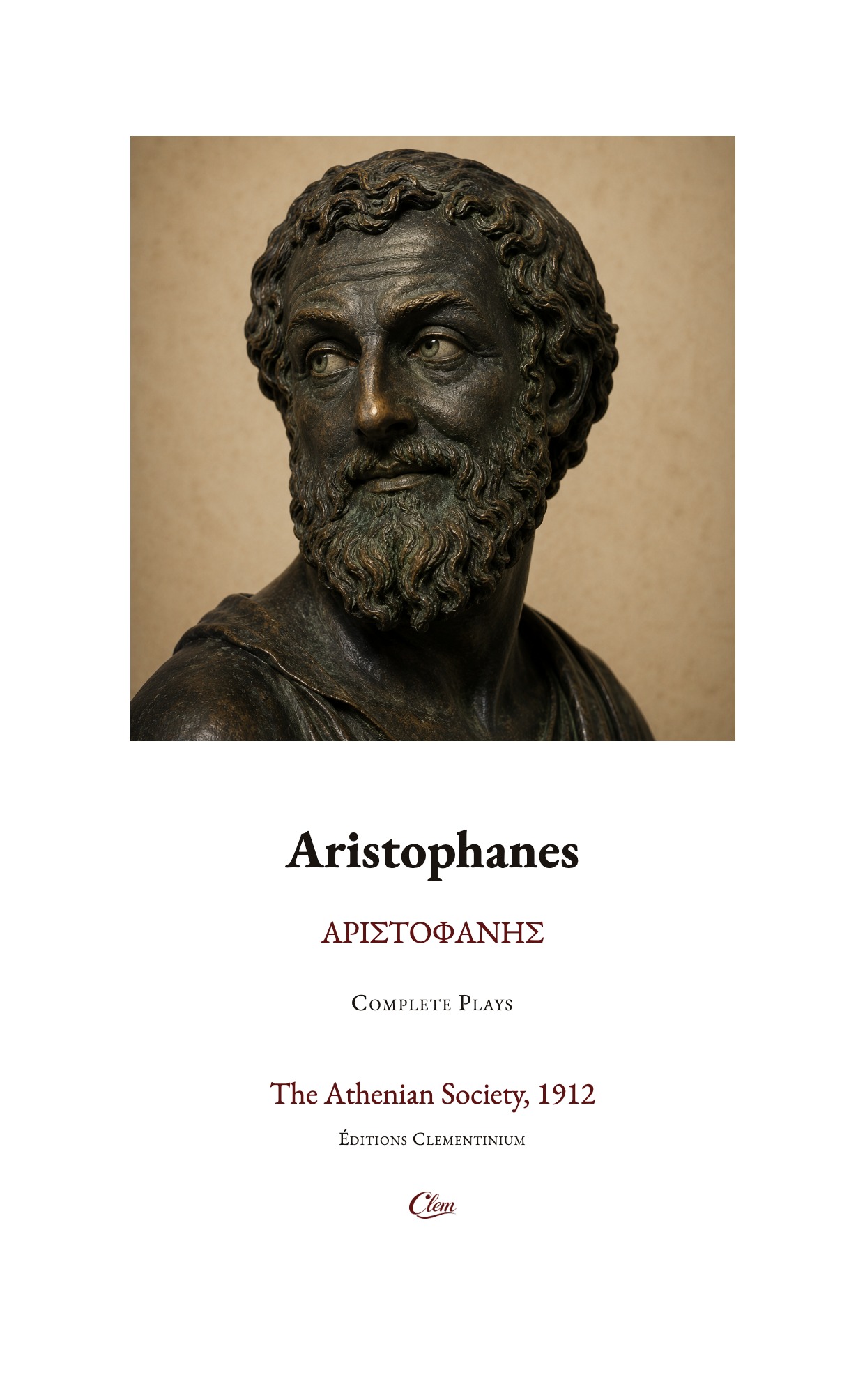
Aristophanes
The Eleven Comedies, with Greek Text
The eleven surviving comedies of Aristophanes (from The Acharnians in 425 to Wealth in 388), the only surviving example of Attic Old Comedy, Greek text with the Athenian Society's 1912 translation in parallel. Comic speech carried onto the political rostrum: the parabasis, where the chorus addresses the audience in the poet's own voice, ritual obscenity, boundless verbal invention, Cleon insulted on stage in the middle of the Peloponnesian War. A general Introduction in two essays, a Notice for each play (in chronological order), and line-anchored Notes accompany the text.
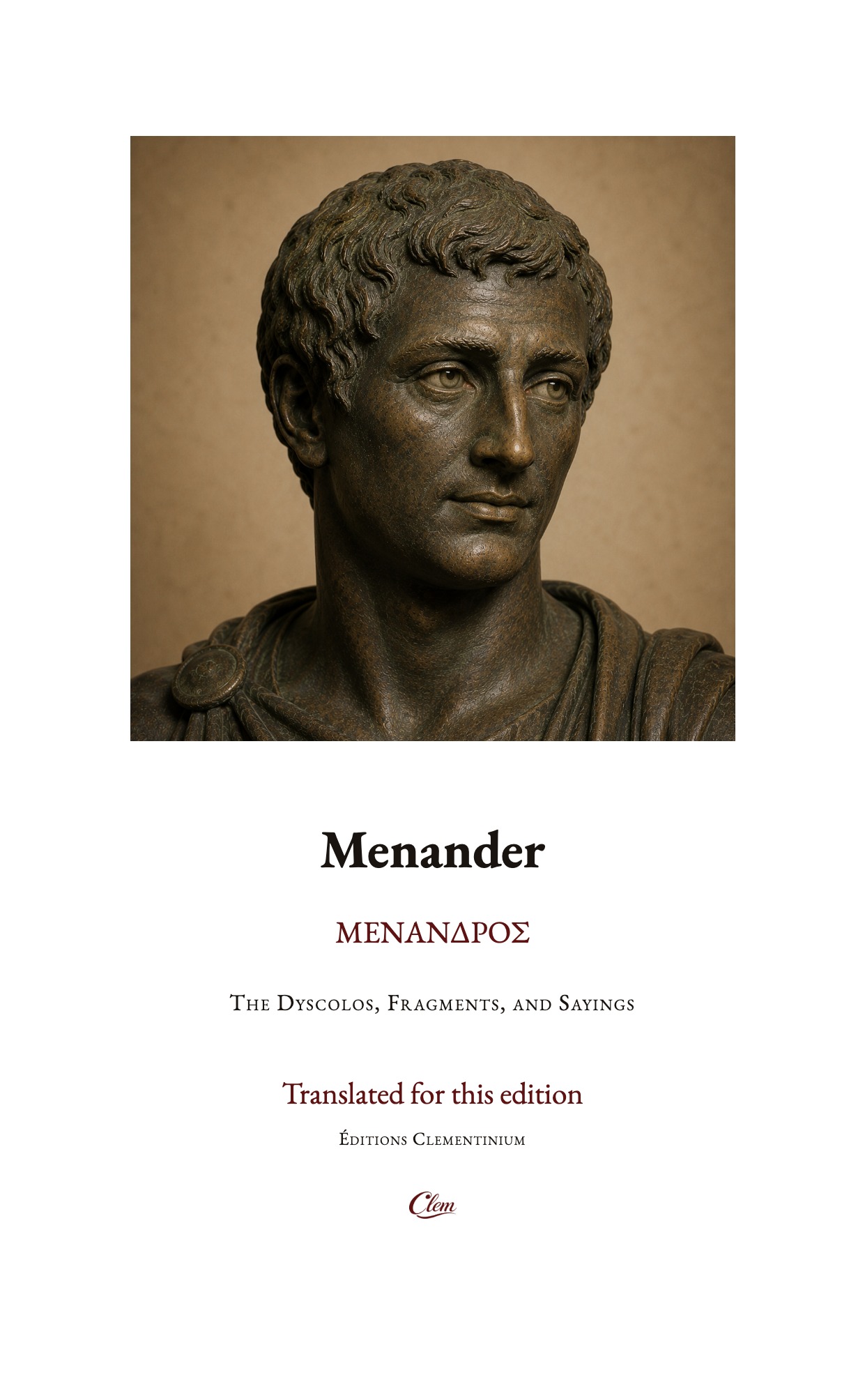
Menander
Dyscolos, Fragments, and Sayings
What the sand gave back of Menander, leading figure of New Comedy: the Dyscolos, the only comedy to survive whole (969 lines, recovered on papyrus in 1958), substantial fragments of six other plays (The Samian Woman, The Arbitration, The Girl with the Shaved Head, The Shield, The Sicyonian, The Woman Hated), and the Sayings, a collection of three hundred and five single-line gnomic verses. Celebrated in antiquity ('O Menander, O Life, which of you imitated the other?'), then almost entirely lost until its rediscovery on papyrus in the twentieth century. The comedies, outside the reference digital corpus, are given as Notices; the Sayings carry a Greek text and, for want of a public-domain French translation, an original translation made for this edition, with a running commentary.
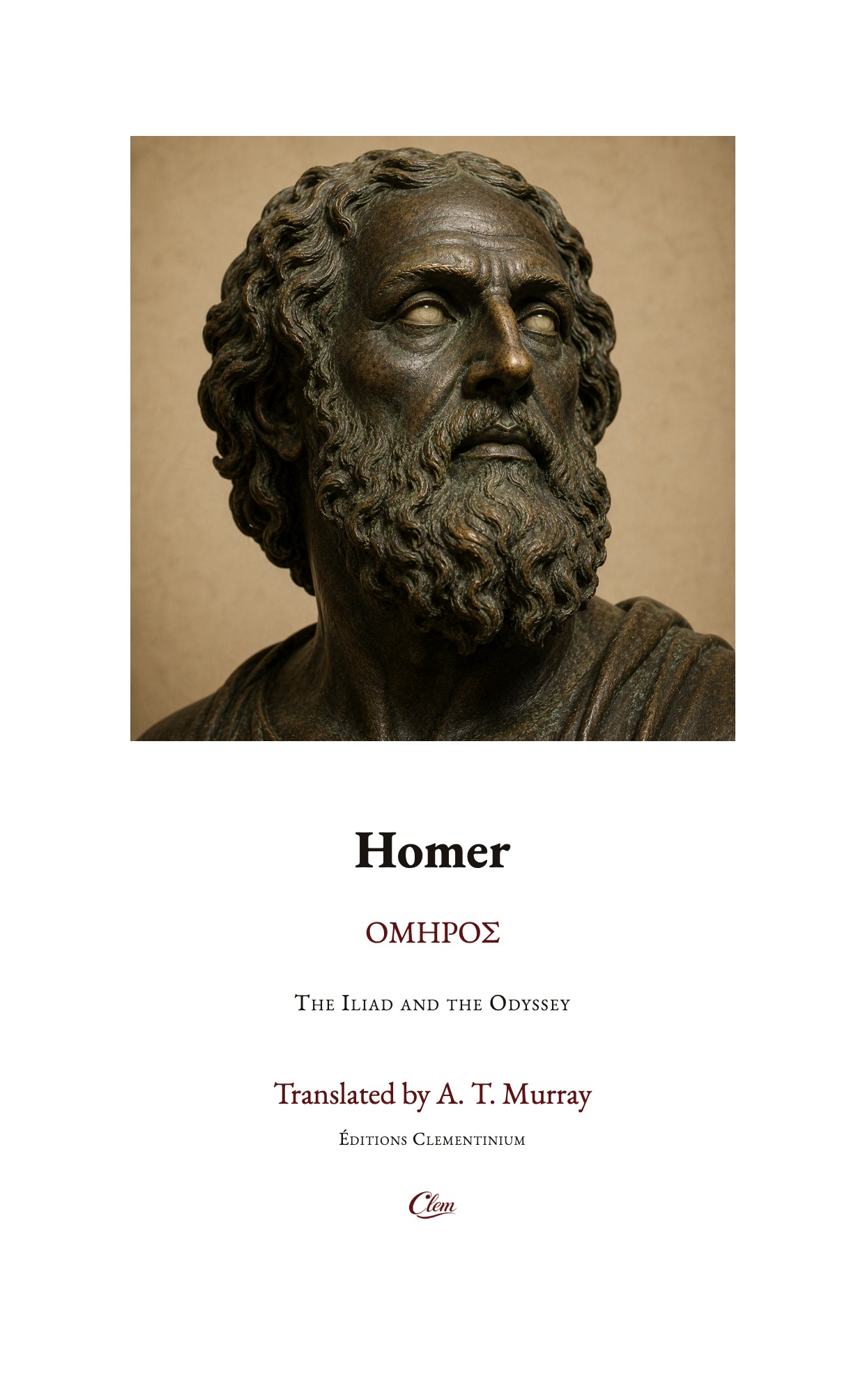
Homer
The Iliad and the Odyssey, with Greek Text
The Iliad and the Odyssey, the two founding epics of Western literature, Greek text (Monro and Allen, Oxford Classical Texts) with A. T. Murray's Loeb translation (Iliad, 1924; Odyssey, 1919) in parallel. The wrath of Achilles in the tenth year of the siege of Troy, then the return of Odysseus: two poems out of an oral tradition long predating their written fixation, composed in an artificial language, mixing Ionic and Aeolic forms, that was never spoken in any city. Speaker attribution follows the DICES apparatus (Digital Initiative for Classics: Epic Speeches). A general Introduction, a Notice for each poem, and line-anchored Notes accompany the text.
Format